
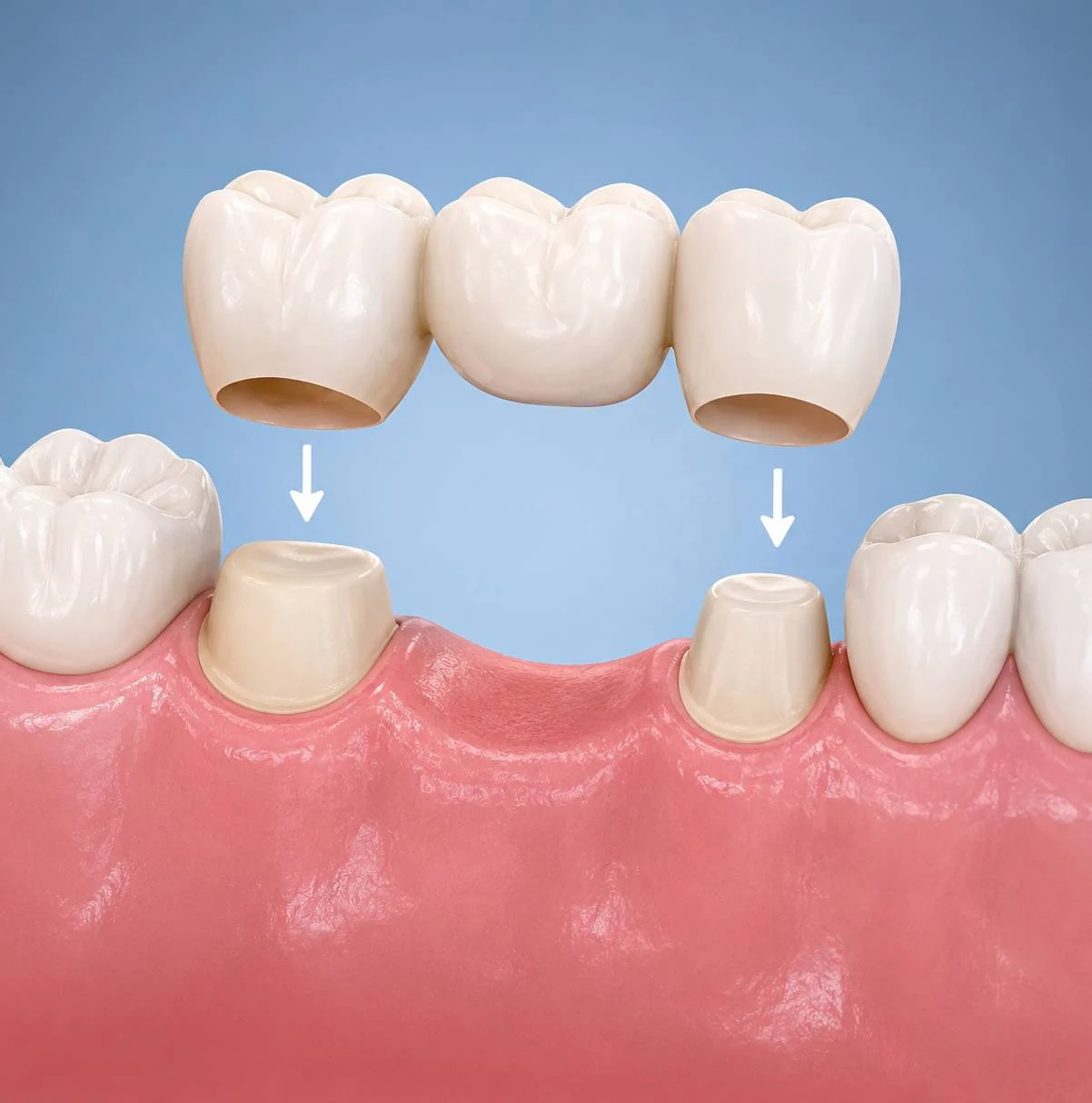
A dental bridge is a fixed restoration used to replace one or more missing teeth. It consists of one or more artificial teeth supported by the natural teeth or dental implants next to the gap. Bridges are designed to blend naturally with your existing teeth, helping restore your smile while making everyday activities such as eating and speaking more comfortable.
Our dental bridges are carefully designed and fitted to provide a comfortable, secure and natural-looking result. Replacing missing teeth can also help prevent neighbouring teeth from moving into the empty space and maintain the natural shape of your smile. Your dentist will assess your teeth, gums and bite before recommending the most suitable type of bridge for you.
A bridge fills the gap left by missing teeth, helping restore the appearance and function of your smile.
Modern bridges can be colour-matched to your existing teeth for a discreet and natural-looking finish.
Replacing missing teeth can make chewing food easier and may help improve speech where missing teeth have affected pronunciation.
A bridge can help stop neighbouring teeth from moving into the space left by a missing tooth, helping maintain your bite and alignment.
A dental bridge is a fixed dental restoration used to replace one or more missing teeth. It is supported by neighbouring natural teeth or dental implants.
With good oral hygiene and regular dental check-ups, a dental bridge can last many years. Its lifespan depends on factors such as the type of bridge, your oral health and how well it is maintained.
The procedure is normally carried out under local anaesthetic, so you should not feel pain during treatment. Some sensitivity or mild discomfort may occur afterwards but usually settles quickly.
Yes. Once your bridge is fitted and you have become accustomed to it, you should be able to eat most foods normally. Good oral hygiene is important to keep the bridge and supporting teeth healthy.
Brush your teeth twice a day and clean carefully around and underneath the bridge. Your dentist or hygienist can recommend suitable interdental brushes or other cleaning aids to help maintain the area.