71 North Street
- Carshalton
- SM5 2HG
71 North StreetChoosing between 32Co and Invisalign can feel difficult because both treatments use clear, removable aligners to straighten teeth discreetly. The differences are not limited to how the aligners look. Each system has its own approach to treatment planning, materials and technology, and one may be more suitable for your teeth and bite than the other.
Neither treatment is automatically best for everyone. The right choice depends on the movements your teeth require, your oral health, your lifestyle and the treatment plan recommended after a professional assessment.
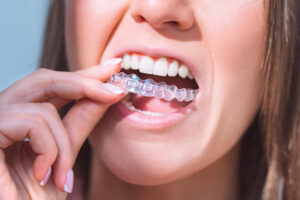
32Co and Invisalign both straighten teeth through a planned series of custom-made aligners. You normally progress from one aligner to the next as your teeth gradually move towards their intended positions.
The key points are:
Clear aligners fit closely over the teeth and move them incrementally according to a professionally developed treatment plan. The British Orthodontic Society advises that a proper assessment, diagnosis and treatment plan are essential to successful aligner treatment.
32Co is a clear aligner system designed to support dentists with orthodontist-informed treatment planning. Instead of viewing aligners purely as a manufactured product, the system places considerable emphasis on the clinical plan behind the tooth movements.
The company describes its approach as “orthodontist-fuelled”, with treatment planning support from orthodontic professionals. It also gives clinicians access to several aligner materials rather than restricting every case to one material.
For patients, treatment still follows the familiar clear aligner process. Your teeth are assessed and digitally scanned, a series of aligners is created, and each aligner guides the teeth through part of the planned movement.
You can learn more about the treatment itself on Carlton Dental’s 32Co Clear Aligners page.
Invisalign is one of the most widely recognised clear aligner systems. It uses a sequence of removable aligners to gradually straighten the teeth without traditional brackets and wires.
Treatment begins with an assessment and a digital scan. The clinician plans the intended tooth movements, checks the fit of the aligners and reviews progress during treatment. Invisalign aligners are made using the brand’s proprietary SmartTrack material, and the system has its own digital treatment-planning technology.
Invisalign can be used for a range of orthodontic concerns, although suitability still depends on the individual case and the clinician’s assessment.
Carlton Dental provides further information about the process on its Invisalign treatment page.
For most patients, the day-to-day experience may initially appear quite similar.
Both treatments use transparent trays that fit closely over the teeth. They are designed to be less noticeable than conventional metal braces and can be removed when eating, drinking and cleaning your teeth.
This flexibility is one reason aligners often appeal to adults whose professional or social lives make more visible appliances less desirable.
Neither system moves every tooth at once. Treatment is divided into stages, with each aligner responsible for a small part of the overall movement.
Your teeth must respond as expected before you can progress successfully through the sequence. This is why wearing the aligners as directed and attending review appointments are important.
Both systems rely on a detailed digital treatment plan. At Carlton Dental, digital scanning can create an accurate representation of your teeth without conventional putty impressions.
The practice’s 3Shape TRIOS Move scanning technology supports digital assessment and treatment planning across suitable dental and orthodontic treatments.
Clear aligners can only move your teeth effectively when they are worn as directed. Whichever system you choose, you will need to follow your clinician’s instructions, look after the aligners and maintain good oral hygiene.
Removing them too frequently can affect how well the next aligner fits and may extend treatment.
The most meaningful differences relate to the systems behind the aligners rather than their transparent appearance.
32Co highlights orthodontist involvement within its planning model. Its system is designed to allow a treating dentist to work with orthodontic expertise when developing and refining a patient’s plan.
Invisalign uses its own ClinCheck digital treatment-planning system and draws on the brand’s established aligner technology. Your Invisalign-trained clinician remains responsible for assessing you, approving the plan and monitoring treatment.
For patients, the important question is not simply which software is used. It is whether the proposed plan is clinically appropriate, clearly explained and properly monitored.
Invisalign uses its proprietary SmartTrack material across its aligners. The company states that this multilayer material has been developed specifically for the Invisalign system.
32Co gives clinicians access to several established double-layer and triple-layer aligner materials, allowing the chosen material to be considered alongside the requirements of the case.
Patients are unlikely to be able to judge material differences simply by looking at an aligner. Your clinician can explain whether a particular material or system offers a practical advantage for your planned treatment.
Invisalign is the more widely recognised consumer brand. Some patients arrive at a consultation already familiar with the name because they have seen advertising or know someone who has completed treatment.
32Co is a newer alternative that differentiates itself through its clinical planning model and treatment options rather than consumer brand recognition.
Brand familiarity can be reassuring, but it should not replace an individual suitability assessment.
Both systems may be suitable for a range of alignment concerns, but the actual treatment available depends on the clinician, the system selected and the complexity of your case.
You should not assume that one brand will automatically treat every problem or that all clear aligner cases are straightforward. Some movements may require attachments, small amounts of space creation, additional aligners or another orthodontic approach.
Depending on the case, clear aligners may help improve:
Suitability cannot be confirmed from photographs or a symptom list alone. Your gums, jawbone, existing dental work, bite and overall oral health must also be considered.
The British Orthodontic Society notes that aligner treatment carries risks similar to other forms of orthodontic treatment, including temporary soreness, gum irritation, failure to achieve the intended result and relapse when retainers are not worn.
Both 32Co and Invisalign are designed to fit closely over the teeth, but no orthodontic treatment is entirely sensation-free.
It is normal to feel pressure when you begin wearing a new aligner because that pressure is part of how the teeth move. Some patients may also notice temporary tenderness or irritation while adjusting.
Comfort depends on several factors:
It would therefore be misleading to say that one system is universally more comfortable. Your own treatment plan is likely to make a greater difference than the brand name alone.
There is no reliable universal answer.
Treatment time depends primarily on:
A mild spacing concern may take far less time than significant crowding or a bite correction, regardless of whether 32Co or Invisalign is used.
Be cautious about choosing treatment based only on the shortest advertised timeline. A realistic plan should prioritise safe, controlled movement and a stable result.
The cost of clear aligner treatment varies according to the complexity and length of the case, not only the aligner brand.
A treatment quote may reflect:
Before comparing prices, ask what each quote includes. A lower initial figure may not cover every stage of treatment, while another quote may include reviews, refinements or retention.
Carlton Dental can explain applicable costs and available arrangements after assessing your individual needs. General information is also available on the practice’s fees and finance options pages.
Rather than choosing from a list of brand features, consider the questions that will affect your real treatment experience.
A small gap, moderate crowding and a complex bite problem require very different plans. The best system is the one capable of delivering the movements you need under appropriate clinical supervision.
Ask who is responsible for planning your case, approving the tooth movements and making changes if your teeth do not respond exactly as expected.
Find out how often you will be reviewed, what happens if an aligner stops fitting and whether additional aligners are included or available.
Removable aligners demand consistency. If you frequently forget to wear them, lose them or remove them for long periods, neither system is likely to perform as planned.
Decay and active gum problems may need attention before orthodontic treatment begins. Professional cleaning and home-care advice can help you maintain healthy teeth and gums during treatment. Carlton Dental’s Dental Hygienist and Airflow service may form part of that wider care where appropriate.
One common mistake is choosing by brand before having an examination. Clear aligner suitability is a clinical decision, not just a lifestyle preference.
Other mistakes include:
Clear aligner treatment affects the teeth, roots, gums and bite. Professional assessment and monitoring are therefore important throughout the process.
32Co and Invisalign are both credible clear aligner options, but the best result depends on much more than the name printed on the packaging. Your oral health, required tooth movements, treatment plan, daily commitment and professional monitoring all matter.
Carlton Dental offers both systems as part of its wider range of teeth straightening treatments. A consultation allows the team to assess your smile, explain the relevant differences and recommend an option based on your clinical needs rather than brand preference.
To discuss which clear aligner may be suitable for you, book a teeth straightening consultation with Carlton Dental.
Back to Blog